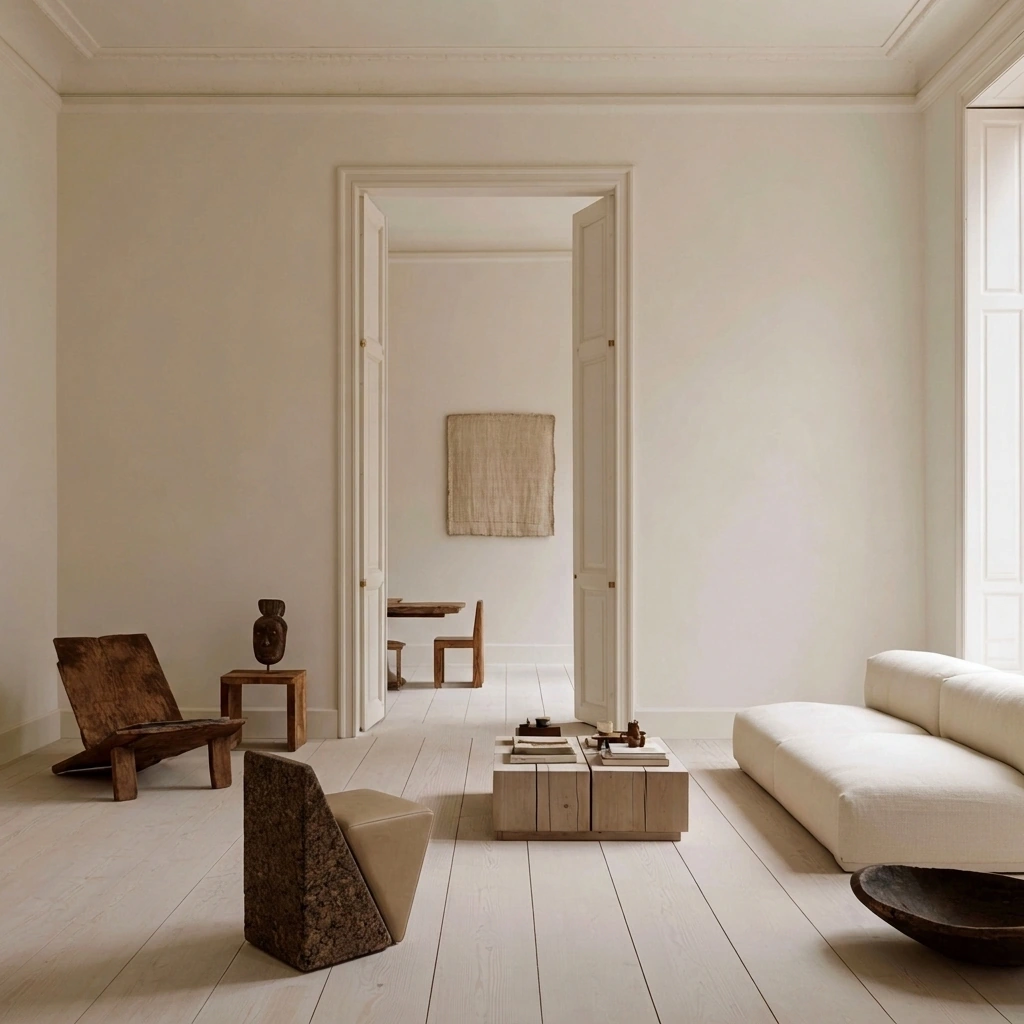
YI STOOL.
A study in balance.
Cork & leather.
Two forms.
One quiet
balance.
A grounded cork form.
A soft leather volume.
A place to pause.
Hsieh-jen Lee
A dialogue
between
two triangles.
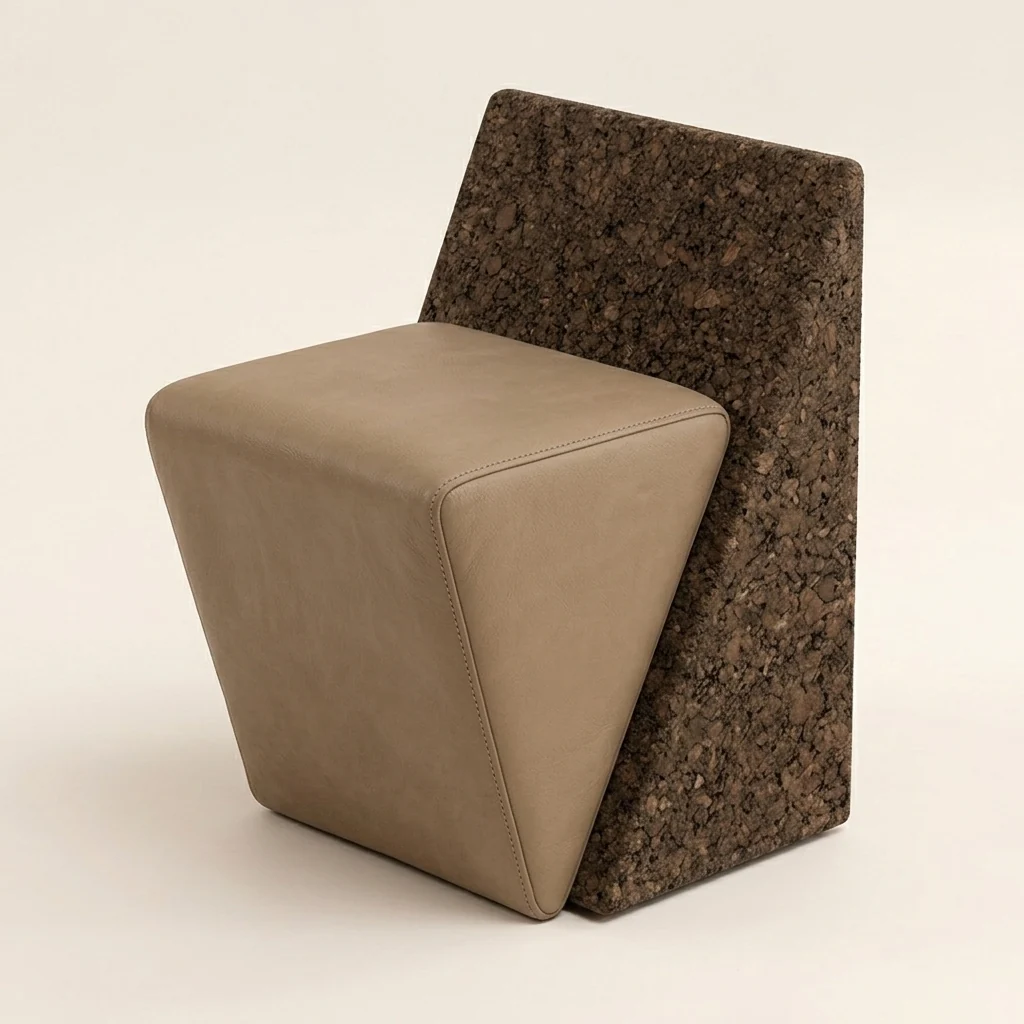
An upright volume meets an inverted one. Their shared diagonal brings two distinct materials into a single, balanced profile.
The cork body rises from the floor to form a backrest. The leather seat opens toward the body, then narrows to the ground. Yi finds its character in this simple relationship: firm and soft, upright and inclined.
A clear profile.
A softer edge.
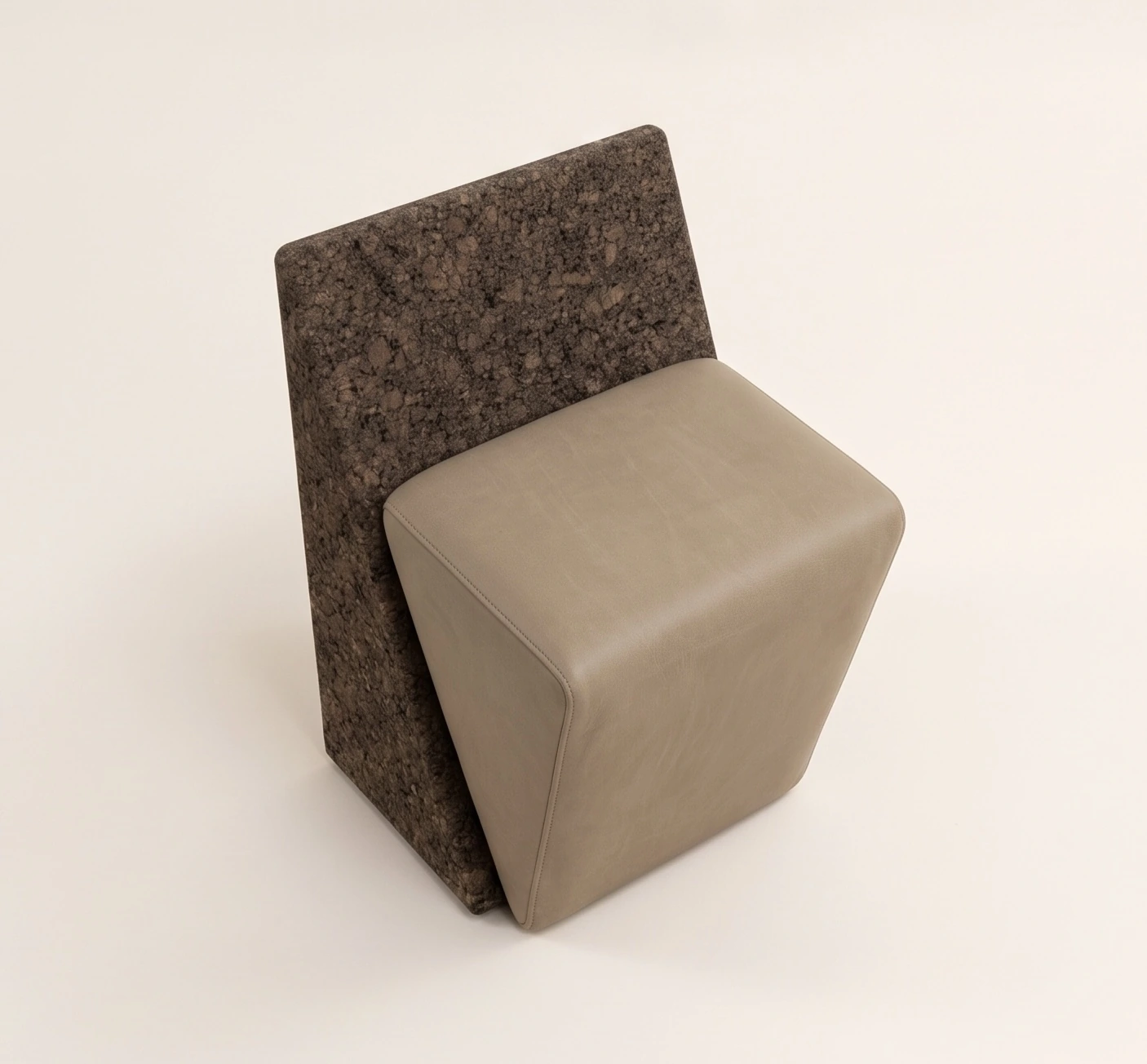
Two contrasting volumes define the form. A vertical rear line anchors the composition, while rounded edges soften the transition between surfaces.
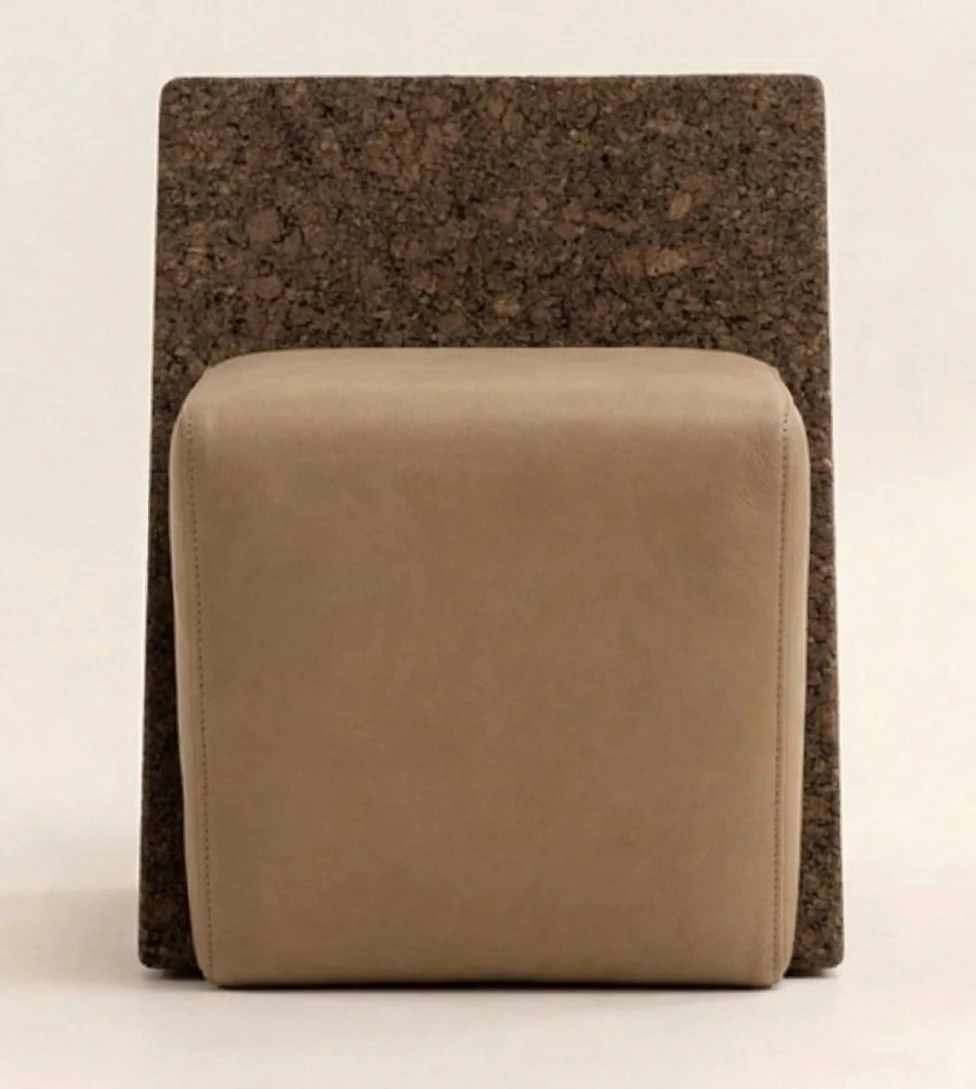
Texture
meets
touch.
Textured cork and soft upholstery bring different expressions to the same form.
Cork
In natural brown or carbon black, the rich, granular cork texture gives the body its grounded presence.
Leather & fabric
Sand leather pairs with natural cork. Light grey fabric pairs with carbon-black cork. Both follow the same rounded seat and fine stitched outline.
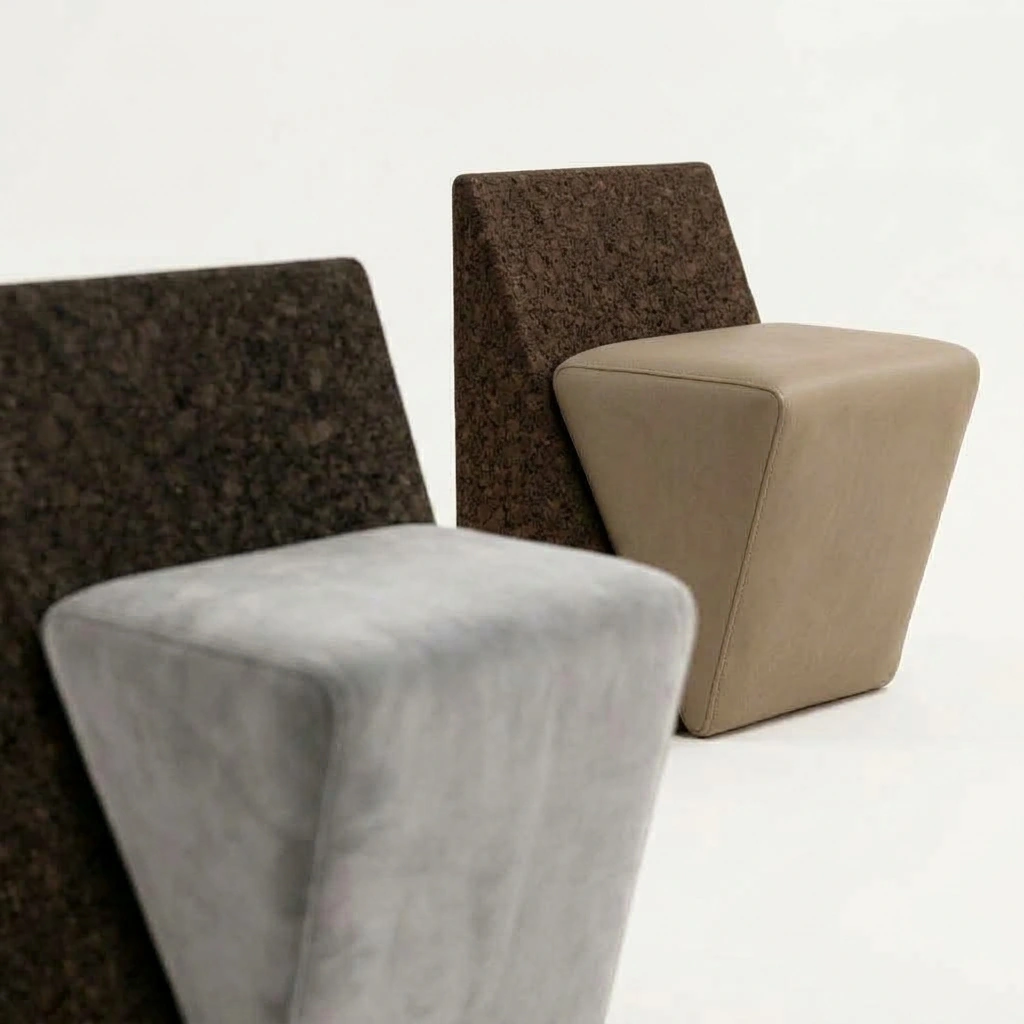
See it from
every side.
Turn the latest design to explore its proportions,
rounded crown and stitched leather edge.
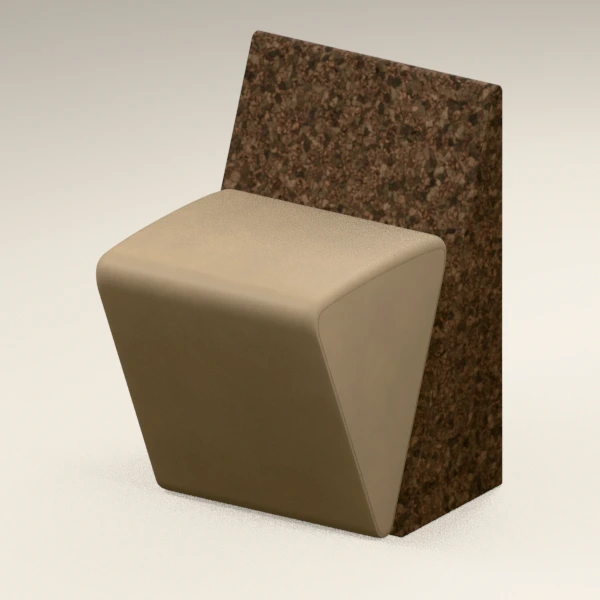
Select Explore in 3D to begin.
45cm
65cm
44cm
50cm
A small place
to settle.
A broad, gently rounded seat invites a pause. Its low back and compact form give Yi a presence that sits comfortably alongside everyday life.
Colour studies / Sand leather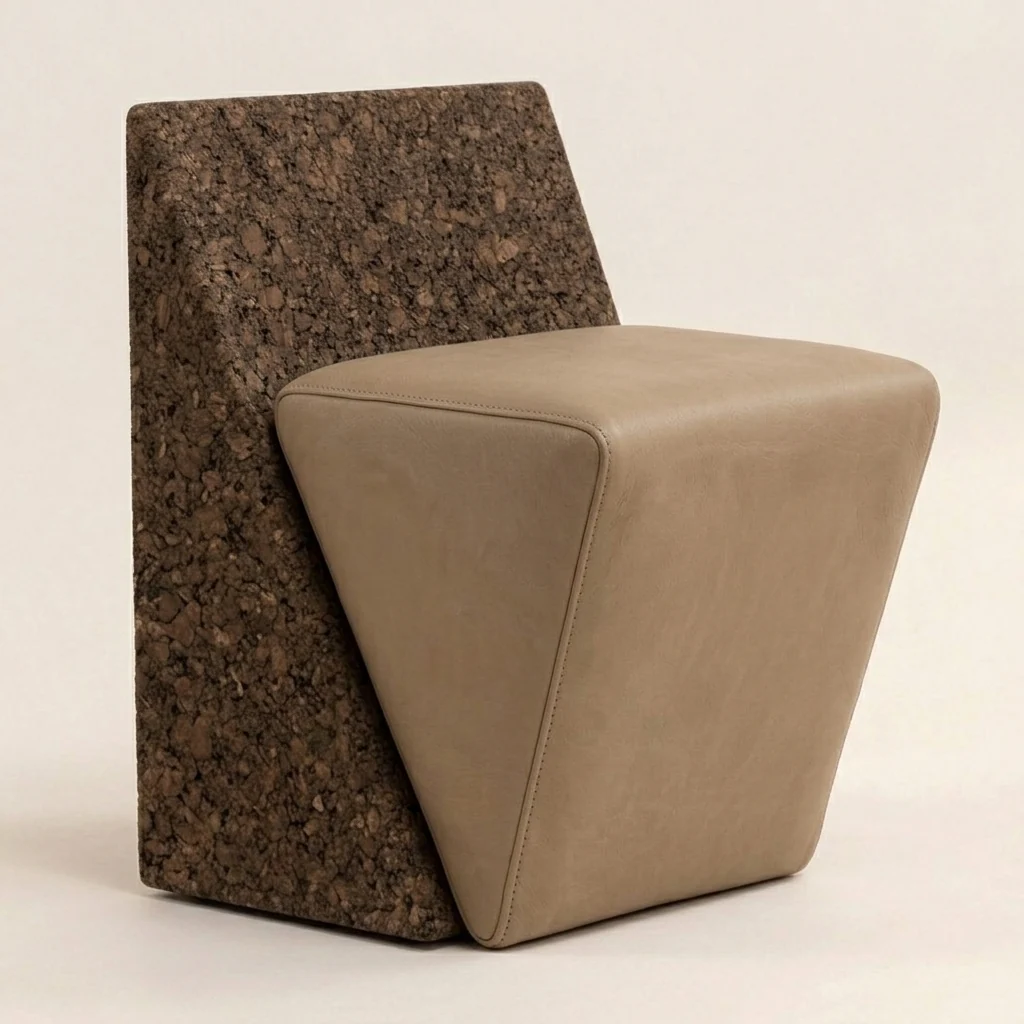
A renewable beginning.
A renewable material, considered use
and the ambition to last.
- 01
Renewable by nature
Cork is harvested from bark without felling the tree. The bark regenerates between harvests. Yi places this renewable resource at the centre of its material concept.
- 02
Use material with purpose
Each of the two volumes has a clear role in the form. Material use and strength will be balanced through prototype testing.
- 03
Design for a longer life
A lasting form and careable upholstery guide the design. Responsible sourcing, repair options and end-of-life separation remain development goals.
Design intentions; environmental performance is not yet quantified. Cork reference: Corticeira Amorim, “Curiosities”
At home
in the
in-between.
Beside an artwork, beneath a pool of light, or at the edge of a room. A sculptural object becomes part of the everyday.